Figuring out the best time to visit Italy as a first-timer in 2026 is the single most important planning decision you will make — and it comes down to one big trade-off: peak summer versus shoulder season. Get the timing right and you will see the Colosseum without a two-hour queue, find a room in Venice at a sane price, and actually enjoy the Amalfi Coast instead of fighting for breathing room on the clifftop paths. Get it wrong and you will spend more money to see more crowds in hotter weather.
This guide is a complete 2026 travel calendar built for first-time visitors. We walk through every season month by month, explain the annual rhythms that push Rome, Florence, Venice, and the Amalfi Coast into overdrive, and flag the one big 2026-specific factor that changes the usual rules this year: the extraordinary Holy Year (Jubilee) that brought enormous pilgrimage crowds to Rome. By the end you will know exactly which weeks to book — and which to avoid.
Why 2026 Is Different: The Jubilee's Ripple Effect
The Catholic Jubilee, or Holy Year, ran from 24 December 2024 to 6 January 2026. It drew a staggering 33.5 million pilgrims from 185 countries to Rome — roughly 90,000 people passing through the city on an average day. That ended in the first week of January 2026, so the bulk of the surge is behind us. What first-timers should take away is this: Rome opened 2026 with January carrying significant tail-end pilgrimage traffic, and the whole Holy Year pushed Rome's hotel prices and crowd levels far above normal through most of 2025 into early 2026. For 2026 planning, the practical effect is that shoulder-season pricing across Italy — especially in the Eternal City — is normalizing, making the classic shoulder months smarter than ever.
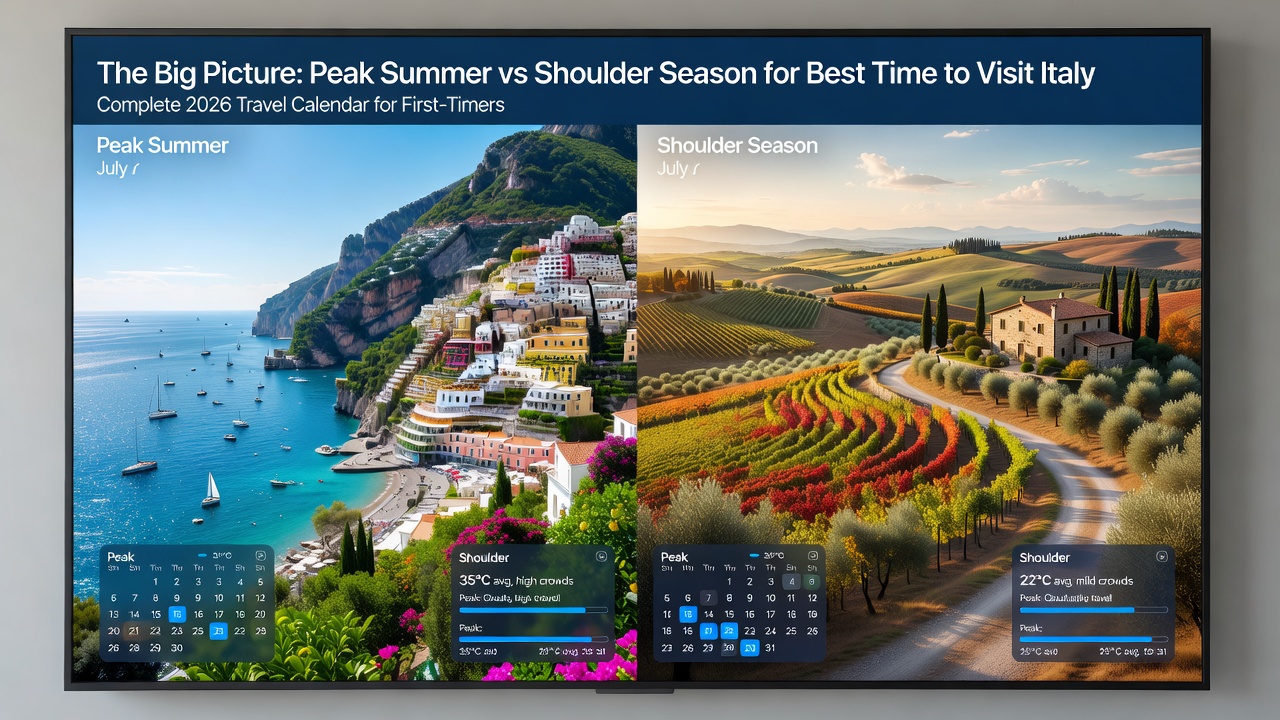
The Big Picture: Peak Summer vs Shoulder Season
Italy runs on a clear seasonal rhythm, and first-timers benefit enormously from understanding it before booking:
- Peak summer (June–August): Hot, packed, and pricey — but long days, beach weather, and the fullest festival calendar.
- Shoulder season (April–May, September–October): Warm-but-comfortable weather, far smaller crowds, and hotel prices that can drop 30–50% versus August.
- Off-season (November–March): Coldest, quietest, and cheapest — ideal for city culture and holiday markets, less for beaches.
The single most valuable habit for a first-time traveler: treat April–May and September–October as your default window, and only choose peak summer if you specifically want heat, beaches, and festivals.
Month-by-Month Italy Travel Calendar for 2026
January & February — Quiet Rome, Cold North
January is Italy's slowest month. In Rome, expect crisp days, short queues at the Colosseum and Vatican Museums, and hotel rates that are often half of August's. Venice can flood the squares in heavy rain, so pack waterproof boots. February adds Carnival in Venice (traditionally mid-February, ahead of Lent) — a genuine highlight if you time it. This is culture-trip weather: museums, churches, and trattorias without the crowds.
March — The First Warmth
March starts to warm up, especially in the south. Rome and Naples see pleasant daytime highs and a manageable mix of tourists. Florence is still comfortable. Prices begin climbing from winter lows. It is a solid month for first-timers who want mild weather without peak-season chaos.
April & May — The First Shoulder Season (Sweet Spot #1)
April brings Easter week — a major holiday week across Europe, so book early or avoid the exact Easter dates (Rome can surge). Italy's green countryside is at its loveliest, and May delivers warm, sunny days with lows still in the 10s at night. This is arguably the best time of year to see Rome, Florence, and the Amalfi Coast: the coast's towns are lively but not suffocating, and you can tour the Forum and Uffizi without hurricaning through shoulder-to-shoulder crowds. Expect good-value hotels if you book a few weeks out.
June — Peak Summer Begins
June is the best of the summer months: reliably warm and hot in the south, long daylight, and crowds that are busy but not yet at July–August extremes. Beach season ramps up on the Amalfi and Cinque Terre. If you must travel in peak season, June is the month to choose. Prices rise, so book accommodation well in advance.
July & August — The Absolute Peak
This is max-volume Italy. Expect 30°C+ heat in Rome and Naples, road-rage-level traffic in Amalfi villages, sold-out hostels, and premium room rates. August has an extra quirk: many Italians themselves go on holiday mid-August (Ferragosto, 15 August), closing small shops and trattorias and pushing domestic crowds to the same coastal destinations you want. The upside: festivals, beach weather at its peak, and a buzzing energy everywhere. The downside for first-timers is real — book every museum ticket weeks ahead or face hours of queueing.
September & October — The Second Shoulder Season (Sweet Spot #2)
Many experienced travelers consider September the single best month to visit Italy. The heat breaks, the sea is still warm enough to swim, summer crowds thin out dramatically, and the grape harvest colors the countryside. October stays mild and adds the olive harvest and autumn cuisine. Hotel prices ease, Rome's queues shrink, and Florence's galleries feel calm again. If you missed April–May, book September for the best balance of weather and crowds.
November — Quiet and Affordable
November is cool, damp, and cheap. Venice is at its moody, atmospheric best, Rome is gentle, and you can often find excellent hotel deals. The Amalfi Coast and beach towns largely shut down for the season. It suits travelers who prioritize budget and tranquility over beach weather.
December — Christmas Markets and Festive Rome
December brings holiday markets, festive lights in Rome and Florence, and the Vatican's Christmas Eve Mass. Expect cool weather, moderate crowds in the main cities, and higher prices over Christmas/New Year. Great for a festive first-time city itinerary.
Best Time to Visit Italy's Big Four, by Mid-Year
- Rome & the Vatican: April, May, September, or October — cooler walking weather and the smallest queues post-Jubilee.
- Florence & Tuscany: May and September for perfect gallery-and-countryside weather; June for full summer energy.
- Venice: April–May or September–October to avoid both the summer crush and winter flooding (acqu alta).
- Amalfi Coast: late April–May or September — warm enough to swim, calmer roads, and coastal towns fully open without August's gridlock.
Practical 2026 Travel Tips for First-Timers
- Book peak-season tickets online in advance — the Colosseum, Vatican Museums, and Uffizi sell out in summer. Reserve as soon as dates are set.
- Use trains between cities — Italy's high-speed rail links Rome, Florence, Venice, and Naples quickly and comfortably.
- Pack for layering even in shoulder season — days can be warm, nights cool, and coastal breezes sharp.
- Avoid ferry-dependent plans in winter — Amalfi boat services and many island routes shrink from November to March.
Stay Connected With a Europe eSIM
Whatever month you choose, your phone is your navigation, translation, booking, and photo lifeline across the whole trip. Roaming fees can quietly eat a travel budget, and hunting for café Wi-Fi between museums wastes precious sightseeing time. The easy fix is a Europe eSIM that works across Italy and 30+ countries — a prepaid travel data plan you can install in minutes before you fly, connecting the moment you land in Rome, Florence, or Venice. It is the smart, affordable way to keep first-time travel smooth — no physical SIM swaps, no surprise roaming bills, and coverage that follows you across the Schengen area if you hop to France, Spain, or beyond.
Frequently Asked Questions
What is the best month to visit Italy for the first time?
For first-timers, May and September strike the best balance of warm, pleasant weather, manageable crowds, and reasonable prices — ideal for Rome, Florence, Venice, and the Amalfi Coast.
Is August a good time to visit Italy?
Only if you embrace heat, crowds, and peak prices. August is the absolute busiest and hottest month, and many Italians close for Ferragosto (around 15 August), so some small shops and restaurants shut. Book all attractions in advance.
How did the Holy Year Jubilee affect 2026 travel to Rome?
The Holy Year ran from late December 2024 to 6 January 2026, drawing over 33 million pilgrims to Rome and pushing crowd levels and hotel prices far above normal. It ended in early January 2026, so the rest of the year is returning to normal seasonal patterns, which favours shoulder-season travel.
Do I need a separate SIM for Italy, or does a Europe eSIM cover it?
A Europe eSIM covers Italy and 30+ countries in one prepaid plan, so you can install it once before departure and stay connected across Italy and any neighbouring countries without swapping SIMs.