eSIM Plans Compared: How to Read the Fine Print and Avoid Hidden Limits
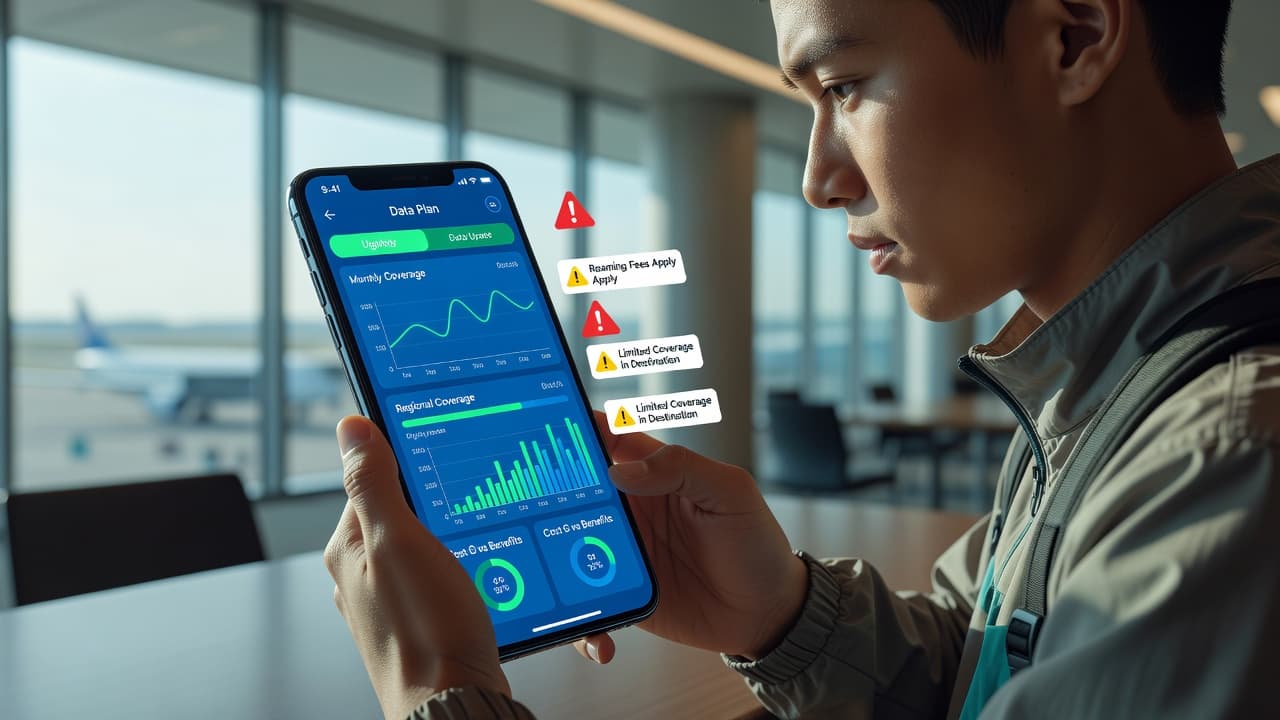
Quick Answer: When comparing eSIM plans, look beyond the headline price. Check throttling speeds after data thresholds, daily versus monthly caps, validity expiration rules, top-up costs and restrictions, and whether hotspot tethering is allowed. The cheapest plan often becomes the most expensive once hidden limits kick in.
Introduction
You've found an eSIM plan advertised at $4.99 for 10GB. Sounds perfect for your week in Tokyo, right? But halfway through day three, your video calls stutter. By day five, your maps won't load. What happened?
This is the hidden limit trap. The travel eSIM market is crowded with providers competing on price, but the real differences hide in terms of service that most travelers never read. This consumer advocacy guide will teach you how to compare eSIM plans like a pro — so you get the data you paid for, when you need it, without nasty surprises.

Why Headline Prices Mislead
The advertised price and data allowance are just the starting point. Providers use similar marketing language — "unlimited," "high-speed," "global coverage" — but the actual experience varies dramatically. Here's what the price tag doesn't tell you.
Throttling Policies: When "Unlimited" Isn't Unlimited
Many eSIM plans labeled "unlimited" throttle your speed after you hit a daily or monthly threshold. That "unlimited" 10GB plan might drop you to 128 Kbps — slower than 3G — making maps, rideshare apps, and video calls practically unusable.
What to check:
- The throttle speed (128 Kbps, 1 Mbps, or 5 Mbps make very different experiences)
- Whether throttling resets daily or monthly
- If throttling applies to all apps or just specific traffic types
A plan throttled to 1 Mbps is still functional for messaging and light browsing. At 128 Kbps, you're effectively offline.
Daily Caps vs. Monthly Caps: Know Your Usage Pattern
Some eSIM plans impose daily data limits — for example, 2GB per day — while others give you a monthly pool to use as needed. Your travel style determines which is better.
Daily caps suit you if:
- You use consistent amounts each day (maps, messaging, social media)
- You want predictable performance without worrying about running out
Monthly pools suit you if:
- You have heavy-use days (video uploads, long calls) and light days
- You want flexibility to binge occasionally without daily restrictions
Watch for hard caps versus throttled caps. A hard cap cuts you off entirely when exhausted. A throttled cap slows you down but keeps you connected — albeit barely.
Shared vs. Per-App Limits
Some providers apply your data cap to all traffic equally. Others exempt certain apps or traffic types — for instance, zero-rating WhatsApp or limiting video streaming separately. Check whether your plan treats all data the same or silos certain categories.
Validity Periods: The Expiration Trap
Validity is one of the most misunderstood eSIM features. Two plans with identical data and price can have wildly different usable windows.
Activation-Based vs. Calendar-Based Expiry
- First-use activation: The countdown starts when you first connect to a network. A 7-day plan activated on Monday expires the following Monday — even if you bought it months ago.
- Calendar-based expiry: The plan expires on a fixed date regardless of when you use it. Bought on January 1st with 30-day validity? It expires January 31st, whether you used 10GB or 100MB.
First-use activation is more forgiving for planners. Calendar-based expiry punishes early buyers and last-minute changes.
Auto-Expiry Risks
Some providers auto-activate your eSIM upon purchase, not upon first use. If your flight gets delayed or your trip postponed, you might burn days (or the entire plan) before you even leave home. Always confirm when the timer starts.
Top-Up Options: Don't Assume You Can Refill
Running out of data abroad is stressful. Not all eSIM plans let you top up, and those that do vary in cost and convenience.
Questions to ask:
- Can you top up within the same plan, or must you buy a new eSIM entirely?
- Does the top-up extend validity, or does the original expiry still apply?
- Is the per-GB top-up price competitive, or is it a penalty rate?
- Can you top up from the provider's app, or do you need to visit a website and re-enter payment details?
Some providers offer seamless in-app top-ups at fair rates. Others treat top-ups as premium purchases priced higher than the original plan. If you're a heavy data user or on a long trip, top-up flexibility is worth paying slightly more upfront.
Hotspot and Tethering: The Fine Print Surprise
Need to share your connection with a laptop, travel companion, or secondary device? Don't assume it's allowed.
Check specifically:
- Whether hotspot/tethering is permitted at all
- If hotspot data counts against your cap differently
- Whether hotspot speeds are throttled separately from phone data
- If there's a device limit (some plans cap tethering to one connected device)
Business travelers and families should prioritize plans with unrestricted tethering. If you only need phone data, this matters less.
The Questions to Ask Before Buying Any eSIM Plan
Use this checklist before purchasing. If a provider can't answer clearly, consider it a red flag.
- What speed do I get after the high-speed threshold — and does it reset daily or monthly?
- Is my data cap hard (cuts off) or soft (throttled)? What's the throttle speed?
- When does validity start — upon purchase, installation, or first network connection?
- Can I top up easily, and at what cost? Does topping up extend my plan?
- Is hotspot/tethering allowed, and are there speed or device limits?
- Which countries or networks are actually covered — and are there roaming restrictions?
- What happens if I don't use all my data? Is there a refund or rollover policy?
- Is customer support available in my language and timezone?
- Can I install the eSIM before travel, or must I wait until arrival?
- Are there any excluded apps, traffic types, or fair-use policies I should know about?
A Practical Comparison Framework
When evaluating two or more eSIM plans, normalize them to the same terms:
- Cost per usable GB: Divide price by actual high-speed data (ignore "unlimited" throttled data).
- Cost per day of validity: A cheap 3-day plan is expensive if you need coverage for two weeks.
- Effective speed: A 10GB plan at 5 Mbps throttled speed delivers very different value than 10GB unthrottled.
- Flexibility premium: Plans with easy top-ups, longer validity, and tethering support often justify a modest price premium.
The cheapest eSIM plans make sense for short, predictable trips with light data use. For longer stays, remote work, or unpredictable usage, pay slightly more for flexibility and transparency.
Common Mistakes Travelers Make
- Buying based on price alone: A $3 plan that throttles to unusable speeds on day two wastes $3.
- Ignoring activation timing: Installing an eSIM too early can start the clock before you travel.
- Assuming "unlimited" means fast: Unlimited at 256 Kbps is not the same as unlimited at full LTE speed.
- Forgetting about tethering: Need laptop connectivity? Verify hotspot support before purchase.
- Not checking coverage specifics: "Europe coverage" might exclude Switzerland or specific carriers.
Key Takeaways
- Always check throttling speeds and reset frequency — "unlimited" rarely means unthrottled.
- Daily data caps suit consistent users; monthly pools suit travelers with variable usage.
- Confirm when validity starts — upon purchase, installation, or first network use — to avoid burning days early.
- Top-up availability and pricing vary significantly; verify before you need more data abroad.
- Hotspot support is not universal; check device limits and whether tethered data is throttled separately.
- Use the cost-per-usable-GB framework to compare plans on equal footing, not just headline price.
- The cheapest eSIM plan is rarely the best value once hidden limits are exposed.
Frequently Asked Questions
What does "throttled" mean on an eSIM plan?
Throttling means your data speed is reduced after you hit a usage threshold. You still have data access, but at slower speeds — often too slow for video calls, maps, or large file downloads.
Can I use an eSIM plan as a mobile hotspot?
Some eSIM plans allow hotspot tethering; others block it or apply separate speed limits. Check the plan's terms before purchasing if you need to share your connection with laptops or other devices.
When does my eSIM plan validity start?
It varies by provider. Some start counting from purchase, others from first network connection, and some from installation. Always confirm the start rule to avoid losing unused days.
What happens if I run out of data on my eSIM?
Depending on the plan, you may be cut off entirely (hard cap), throttled to very slow speeds (soft cap), or offered a top-up option. Check before buying — especially if you rely on data for navigation or communication.
Are "unlimited" eSIM plans truly unlimited?
Rarely. Most unlimited plans throttle speeds after a high-speed data threshold. The unlimited label refers to ongoing connectivity, not unthrottled speed. Always read the fair-use policy.
Can I get a refund for unused eSIM data?
Refund policies vary by provider. Some offer partial refunds for unused data within a window; others treat eSIM purchases as final. Check the refund terms before activating, as activation often voids eligibility.
How do I compare eSIM plans from different providers?
Normalize by cost per usable GB (high-speed data only), cost per day of validity, and effective speed after throttling. Include flexibility factors like top-up ease and tethering support in your comparison.
Do eSIM plans work in every country?
Most eSIM plans are region-specific or global. Even "global" plans may exclude certain countries or rely on partner networks with different coverage quality. Verify specific country coverage before travel.
Conclusion
The eSIM market rewards informed buyers. Headline prices and bold marketing create the illusion of simplicity, but the real value lives in the terms of service most travelers skip. By understanding throttling policies, data caps, validity rules, top-up options, and tethering restrictions, you can choose a plan that actually fits your trip — not just your budget.
Before your next international trip, take five minutes to run any eSIM plan through the checklist and comparison framework in this guide. The peace of mind — and the data you actually paid for — are worth it.
Ready to find a transparent eSIM plan for your next destination? [Internal link: browse regional eSIM plans] and compare options with confidence.