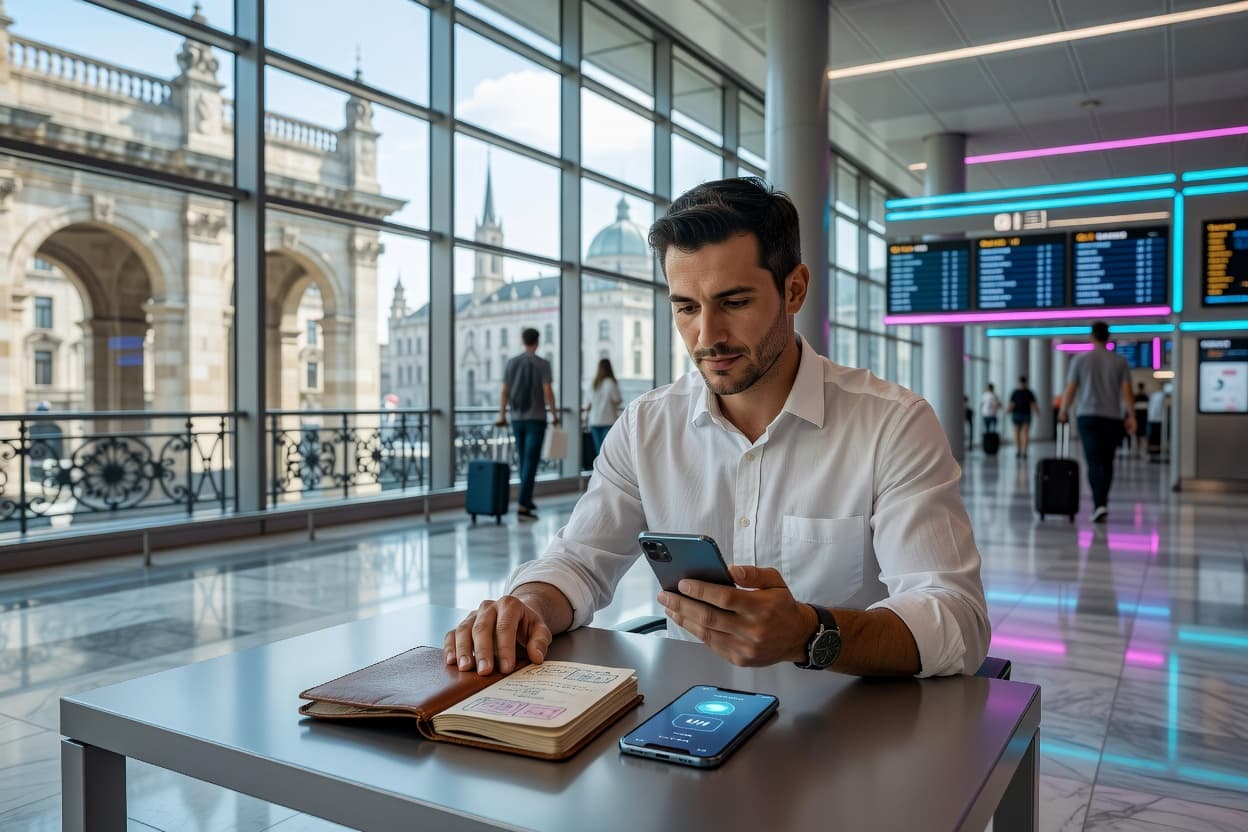
If you're still fumbling with a paperclip to eject a tiny plastic SIM card every time you travel, it's time to talk about the esim vs physical sim debate. In 2026, the shift toward eSIM isn't just a tech trend — it's a practical travel upgrade that saves money, time, and stress. But here's the honest truth: eSIM isn't perfect for everyone yet. This guide breaks down 10 real reasons travelers are switching, the scenarios where a physical SIM still wins, and what it all means for your next trip.
The Shift: Why 2026 Is the Tipping Point for eSIM vs Physical SIM
Apple removed the physical SIM tray from US iPhone models starting with the iPhone 14. Samsung followed with partial eSIM-only models in select markets. Google Pixel has supported eSIM since the Pixel 3. In 2026, the majority of smartphones sold globally are eSIM-compatible — and carriers have caught up. Major operators in 200+ countries now support eSIM activation, making travel esim a mainstream solution rather than a niche hack.
For travelers, this means the old ritual of landing at an airport, finding a SIM counter, showing your passport, waiting for activation, and hoping the data works is officially outdated. But does that mean physical SIMs are dead? Not quite. Let's get into the real comparison.
10 Reasons Travelers Are Switching to eSIM
1. Instant Activation — No Store Visits Required
The biggest win is time. With a physical SIM, you land, walk to a kiosk, wait in line, hand over your passport, and wait 5–15 minutes for activation. With an eSIM, you buy online, scan a QR code, and you're connected before the seatbelt sign turns off. iWanteSIM plans start from $1.00 and deliver a QR code instantly by email — no app download required.
If you've ever landed at 11 PM in a country where airport SIM shops are closed, you know why this matters. Instant activation means you can call an Uber, open Google Maps, or message your hotel the moment you step off the plane.
2. No Physical SIM to Lose or Damage
Physical SIM cards are tiny — about the size of a fingernail. They're easy to drop, lose, or snap. If you swap SIMs frequently for travel, you've probably lost one. An eSIM is embedded in your phone's hardware. It can't be dropped, lost, or damaged. You also don't need a SIM ejector tool, which most people never carry anyway.
This sounds minor until you're standing at a airport gate trying to swap SIMs and the old one falls into the seat crack. With eSIM, that scenario simply doesn't exist.
3. Dual-SIM Capability — Keep Your Home Number Active
This is the killer feature for travelers. Most modern iPhones and many Android phones support dual SIM — one physical SIM and one eSIM active simultaneously. This means you can keep your home number active for calls and texts (like bank verification codes) while using the eSIM for data.
With a physical SIM-only phone, you have to choose: use your home SIM and pay roaming, or swap to a local SIM and lose access to your home number. eSIM eliminates that choice entirely.
4. Cheaper Than Roaming in Most Cases
Let's talk numbers. Major carriers charge $10–$15 per day for international roaming. A 10-day trip to Europe? That's $100–$150 just for data. An eSIM plan for the same trip costs $5–$20 depending on data needs. That's a 5x to 30x savings.
- AT&T roaming — $12/day (Day Pass) = $120 for 10 days
- Verizon roaming — $10/day (TravelPass) = $100 for 10 days
- iWanteSIM Europe plan — from $1.00 to $20.00 for 10 days
- Physical SIM in Europe — $10–$25 at airport kiosks (varies by country)
Even compared to local physical SIMs, eSIM plans are competitive — and you don't have to spend an hour at a shop to get one.
5. Works Across Multiple Countries Without Swapping
If you're doing a multi-country trip — say, France, Italy, and Spain — a regional eSIM plan covers all three without changing anything. With physical SIMs, you'd need to buy a new card in each country or hope your EU SIM roams (which it does within the EU, but not always reliably for tourists).
iWanteSIM offers regional plans like Europe eSIM and Asia eSIM that work across 30+ countries on one plan. For a 3-week Europe rail trip, that's one purchase instead of five.
6. No Need to Swap Cards at Every Border
Related to the multi-country point, but worth its own reason: the physical act of swapping SIMs at borders is annoying, especially if you're moving fast. Train from Berlin to Prague? Your German SIM might not work well in Czechia. Bus from Thailand to Cambodia? Time to find a new SIM shop.
With a regional or global eSIM, you cross the border and your phone automatically connects to a partner network. No swaps, no shops, no downtime.
7. Better Security — eSIM Can't Be Physically Cloned
Physical SIM cards can be cloned with the right equipment. It's rare, but it happens — especially in regions where SIM swapping fraud is common. eSIM profiles are encrypted and digitally signed, making cloning significantly harder. Your eSIM profile is tied to your phone's hardware, not a removable chip that someone could swipe and copy.
For business travelers carrying sensitive data, this is a genuine security advantage, not just a theoretical one.
8. Easier to Top Up or Switch Plans
With a physical SIM, topping up means finding a convenience store that sells top-up cards or navigating a foreign-language website. With an eSIM, you buy a new plan online in seconds. Run out of data in Tokyo? Buy another 3GB plan from your phone. No shops, no cards, no language barrier.
9. One Phone, Multiple Plans — Flexibility for Frequent Travelers
If you travel frequently — say, a business trip to Singapore in March and a vacation in Portugal in July — you can store multiple eSIM profiles on your phone and switch between them as needed. Try doing that with physical SIMs: you'd need a labeled envelope of SIM cards and a ejector tool everywhere you go.
This flexibility makes eSIM the best esim choice for digital nomads and frequent travelers who visit different regions throughout the year.
10. Eco-Friendly — No Plastic Waste
It's a small point, but a real one. Every physical SIM card is a piece of plastic with an embedded chip — manufactured, packaged, shipped, and eventually discarded. eSIM eliminates all of that. For eco-conscious travelers, it's one more reason to switch. Not the biggest reason, but it counts.
When Physical SIM Still Makes Sense
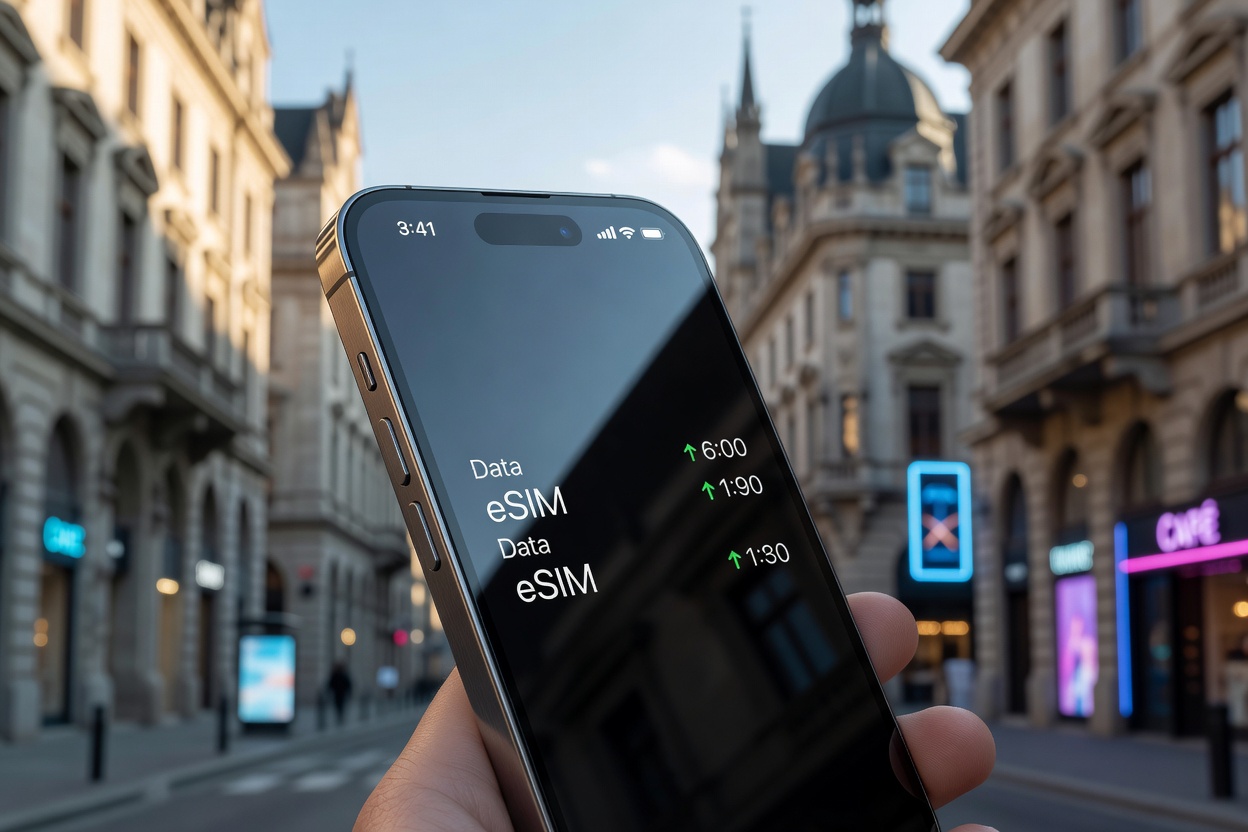
Okay, honesty time. eSIM isn't perfect for every traveler in every situation. Here are the genuine cases where a physical SIM still wins:
- Your phone doesn't support eSIM — Despite 2026 being a tipping point, not all phones support eSIM. Older iPhones (pre-iPhone XR), budget Androids, and some carrier-locked phones don't have eSIM capability. If your phone only takes a physical SIM, this debate is over — you need a physical card. Check your device at our supported devices page.
- Your phone is carrier-locked — If you bought your phone on installment from a carrier, it might be locked to that carrier. Carrier-locked phones often can't activate third-party eSIM profiles. You'd need to unlock your phone first — which may require paying off the device or meeting contract terms.
- You're traveling to remote areas with limited eSIM coverage — eSIM coverage depends on the partner networks your provider uses. In very remote areas — rural Africa, remote islands, mountainous regions — a local physical SIM from the dominant carrier might offer better coverage than an international eSIM that partners with a smaller network.
- Local SIMs are genuinely cheaper — In some countries, local SIMs are extremely cheap — $1–$3 for a prepaid card with data. If you're staying in one country for a long time and don't mind the setup hassle, a local SIM can be the cheapest option. This is especially true in India, Thailand, and Vietnam.
- Data privacy concerns — Some travelers are uncomfortable with the idea of a third-party eSIM profile managing their cellular connection. While eSIM is generally secure, the idea of installing a profile from an unknown provider gives some people pause. With a physical SIM from a local carrier, you know exactly what you're getting.
The point is: eSIM is the better choice for most travelers most of the time, but not all travelers all of the time. Knowing the difference is what makes you a smart traveler.
Traveler tip: Before you travel, check if your phone is eSIM-compatible on your manufacturer's website — not all models support it, even newer budget Androids. You can also check at our supported devices page for a comprehensive list.
Real Traveler Scenarios: eSIM vs Physical SIM
The Business Traveler on a 3-Country Trip
Scenario: Sarah flies from New York to London, then to Paris, then to Frankfurt over 6 days.
With physical SIM: Lands in London, finds a SIM shop at Heathrow, buys a UK SIM ($15, 30 minutes). In Paris, the UK SIM roams at $2/MB — she buys a French SIM at Charles de Gaulle ($12, 20 minutes). In Frankfurt, the French SIM roams — she buys a German SIM ($10, 15 minutes). Total: $37 in SIMs plus 65+ minutes of setup.
With eSIM: Buys a Europe eSIM plan for $15 before flying. Lands in London, turns on data roaming, connected. Train to Paris — same plan, automatic network switch. Train to Frankfurt — same plan. Total: $15 and zero minutes of setup. She saved $22 and over an hour.
The Backpacker in Southeast Asia
Scenario: Mike is backpacking through Thailand, Cambodia, Vietnam, and Laos over 4 weeks.
With physical SIM: Buys a Thai SIM in Bangkok ($8), a Cambodian SIM in Siem Reap ($5), a Vietnamese SIM in Hanoi ($3), and struggles to find a SIM in rural Laos ($10 at a mini-mart). Total: $26 and 4 shop visits, each requiring passport registration.
With eSIM: Buys an Asia eSIM plan for $20 before the trip. All four countries covered — no shops, no passport registration at each border, no SIM swapping. He saves $6, but more importantly, he saves hours of hassle at each crossing.
The Family Vacation in Europe
Scenario: The Chen family — 4 people, 2 weeks in Italy and Spain.
With physical SIM: Each family member needs a SIM. That's 4 SIMs in Italy ($40 total) and 4 SIMs in Spain ($40 total) = $80, plus 4 passport registrations per country and 30+ minutes of setup at each airport with kids in tow.
With eSIM: Two parents get Europe eSIM plans ($10 each = $20). The two kids share a hotspot from one parent's phone. Total: $20, zero shop visits, zero passport registrations. The family saves $60 and significant stress.
How iWanteSIM Makes the Switch Easy
If you've decided eSIM is right for you, switching is straightforward. iWanteSIM offers cheap esim plans from $1.00 across 200+ countries with no hidden charges. Here's what sets it apart:
- Plans from $1.00 — one of the cheapest esim plans on the market
- 200+ country coverage — including regional plans for Europe, Asia, and global
- Instant QR code delivery — buy, scan, connected
- No app required — web-based purchase and QR activation
- 4.9/5 rating from 12,000+ travelers — see real traveler reviews
If you're comparing providers, our eSIM comparison pages break down how iWanteSIM stacks up against Airalo, Holafly, and Nomad on pricing and features. For a full overview of available plans, visit the eSIM plans page.
Frequently Asked Questions
Can I use eSIM and physical SIM at the same time?
Yes. Most modern iPhones (XS and later) and many Android phones support dual SIM — one eSIM and one physical SIM active simultaneously. This means you can keep your home number for calls and texts while using the eSIM for data. This is one of the biggest advantages of eSIM for international travelers who need mobile data abroad without losing their home number.
Is eSIM available on all phones?
No. eSIM requires hardware support. iPhone XR and later (including SE 2nd gen and later) support eSIM. Samsung Galaxy S20 and later, Google Pixel 3 and later, and many other flagship Androids also support it. However, many budget Androids and older models don't. Check your phone's specs or visit our supported devices page to confirm before buying.
What happens if I lose my phone with an eSIM?
If you lose your phone, your eSIM profile goes with it — which is actually a security advantage. Unlike a physical SIM that someone could remove and use in another phone, an eSIM profile is tied to the specific device. You'd need to contact your eSIM provider to transfer the plan to a new device, and the old profile is deactivated.
Is eSIM more expensive than physical SIM?
It depends. For short trips and multi-country travel, eSIM is usually cheaper because you avoid roaming charges and don't need to buy multiple local SIMs. For long stays in one country where local SIMs are very cheap (like India or Thailand), a local physical SIM might be cheaper. Use an esim comparison to check prices before deciding.
Can I switch back to physical SIM after using eSIM?
Absolutely. Using an eSIM doesn't lock you in. You can delete the eSIM profile from your phone at any time and go back to using a physical SIM. The two technologies coexist — most eSIM-compatible phones still have a physical SIM slot (except US iPhone 14 and later models, which are eSIM-only).
Does eSIM work on older phones?
Generally no. eSIM requires a dedicated chip in the phone. If your phone was manufactured before 2018, it likely doesn't support eSIM. Some mid-range phones from 2020–2023 also lack eSIM support. When in doubt, check your phone's specifications or visit our supported devices page.
What's the difference between eSIM and dual SIM?
Dual SIM means a phone can use two SIM connections at the same time. eSIM is a type of SIM technology — a digital SIM embedded in the phone. A phone can support dual SIM using one physical SIM + one eSIM (most common) or two eSIMs (newer iPhones). So eSIM enables dual SIM capability, but they're not the same thing. Our guide to what an eSIM is explains this in more detail.
The Bottom Line
For most travelers in 2026, eSIM is the clear winner in the eSIM vs physical SIM debate. It's cheaper than roaming, more convenient than hunting for SIM shops, more secure than a removable chip, and enables dual-SIM functionality that keeps your home number active while you use travel data. Plans from providers like iWanteSIM start at $1.00 — making it accessible for virtually any budget.
That said, physical SIMs aren't obsolete. If your phone doesn't support eSIM, is carrier-locked, or you're staying in one country where local SIMs are extremely cheap, a physical SIM is still a valid choice. The smartest travelers know both options and choose based on their specific trip.
Ready to make the switch? Browse eSIM plans from iWanteSIM and get your QR code delivered instantly. Or check our esim guide and FAQ for any questions before you buy. Travel connectivity shouldn't be complicated — and in 2026, it doesn't have to be.