Global eSIM vs Regional eSIM: Which One Saves You More Money?
Quick answer: A prepaid Comparisons eSIM from iWanteSIM gives you mobile data without a carrier roaming pass. Plans start from $1.00 across 2 options, delivered as a QR code you install on Wi‑Fi before you fly. Keep your home number for WhatsApp, set the Comparisons eSIM as the data line, and compare live Comparisons plans.
Introduction
Choosing between a global eSIM and a regional eSIM isn't just about coverage—it's about spending wisely. With international roaming charges still hitting $10–15 per day from major carriers, prepaid eSIM plans have become the smart traveler's defense against bill shock.
But here's the catch: buying the wrong plan type can cost you 30–50% more than necessary. This guide breaks down real pricing, trip scenarios, and the financial logic behind each option so you can make the cheapest choice for your specific travel pattern.
What Is a Global eSIM?
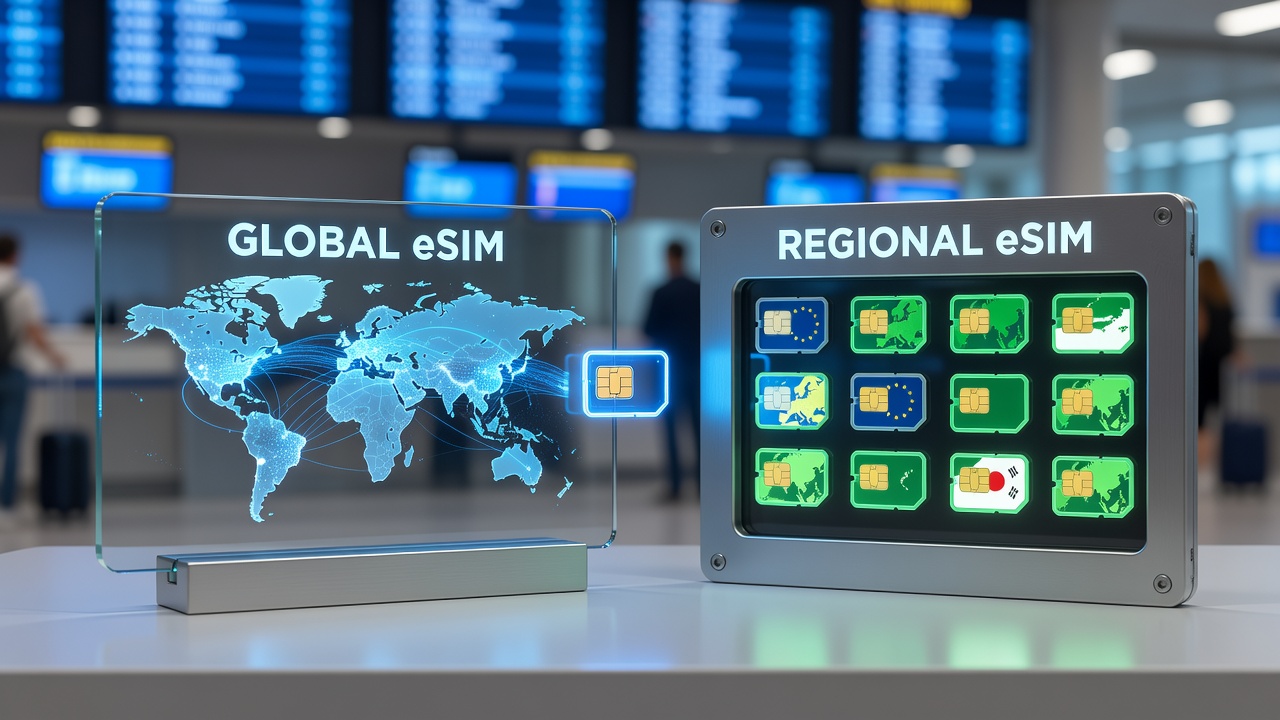
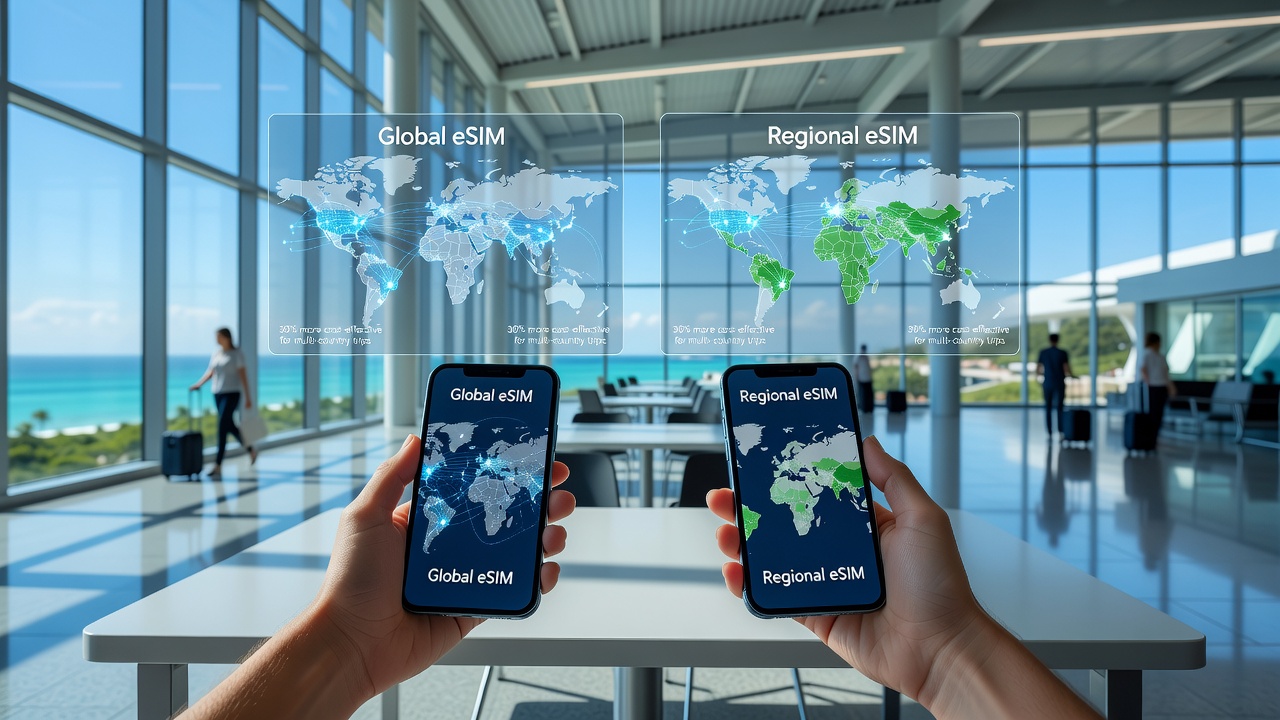
A global eSIM is a single data plan that works across 100+ countries, typically offered by providers like Airalo (Mosalink), Holafly, or Nomad. You activate once and stay connected across multiple continents without swapping plans.
Typical coverage: North America, Europe, Asia, Oceania, and parts of Africa and South America.
Primary use case: Multi-continent trips, frequent business travelers, or digital nomads who don't want to manage multiple regional plans.
What Is a Regional eSIM?
A regional eSIM covers a specific geographic area—Europe, Asia, Latin America, or the Middle East—with localized pricing and often better network partnerships within that region.
Examples:
- Europe eSIM: Covers EU countries plus UK, Switzerland, Norway
- Asia eSIM: Covers Japan, South Korea, Thailand, Singapore, etc.
- Latin America eSIM: Covers Brazil, Mexico, Argentina, Chile, etc.
Primary use case: Single-region trips where you want optimized local networks and lower per-GB costs.
Pricing Breakdown: Global vs Regional eSIM Plans
Here's how actual prices compare for 3GB/7-day and 10GB/30-day plans across major providers (prices in USD):
| Plan Type | 3GB / 7 Days | 10GB / 30 Days | 20GB / 30 Days | Price per GB |
|---|---|---|---|---|
| Global eSIM (Airalo Mosalink) | $20 | $35 | $59 | $2.95/GB |
| Europe Regional (Airalo) | $13 | $22 | $38 | $1.90/GB |
| Asia Regional (Holafly) | $15 | $27 | $44 | $2.20/GB |
| Latin America Regional | $16 | $29 | $48 | $2.40/GB |
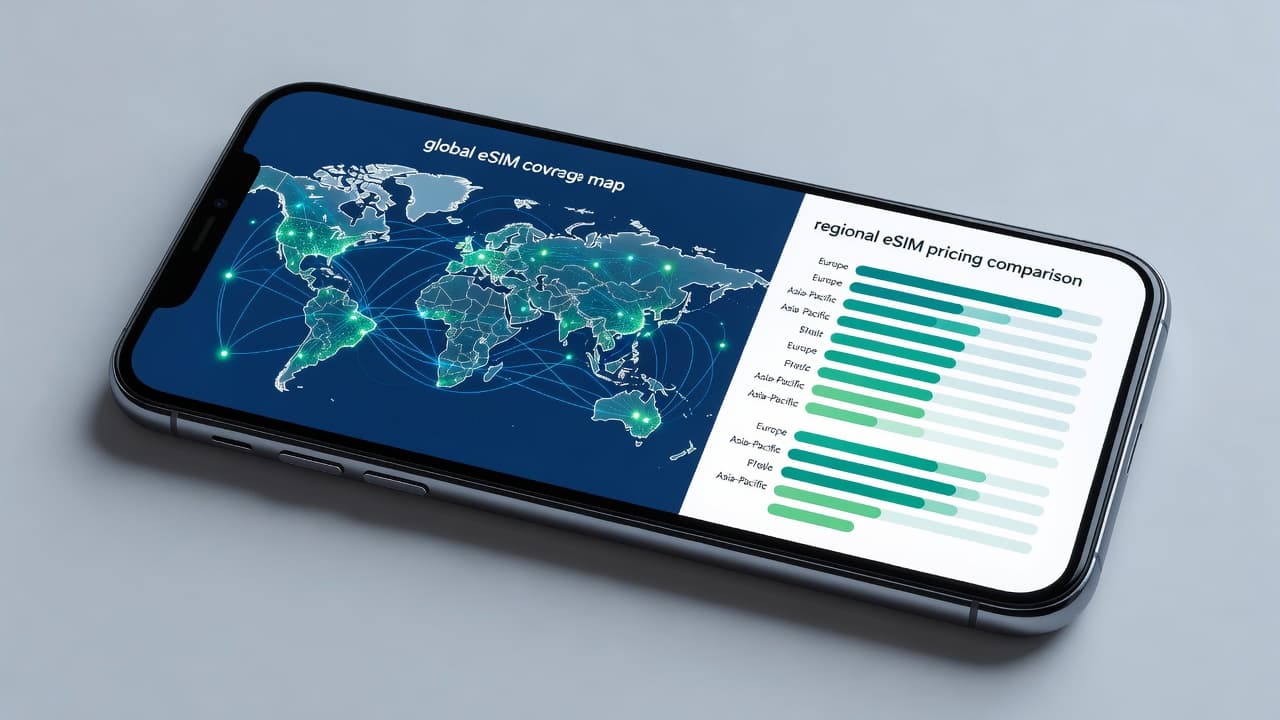
Key insight: Regional plans cost 25–45% less per GB than global plans. But global plans eliminate the cost and hassle of buying multiple regional plans for multi-region trips.
Trip Scenario Breakdowns: Which Option Wins?
Scenario 1: 1-Week European City Hop (London → Paris → Rome)
Trip profile: 7 days, 3 countries, moderate data use (maps, social, email).
Option A – Regional Europe eSIM: $13 (3GB/7 days)
Option B – Global eSIM: $20 (3GB/7 days)
Winner: Regional Europe eSIM saves $7 (35%). You don't need global coverage for a Europe-only trip, and regional plans often include better local network priority.
Scenario 2: 2-Week Multi-Continent Trip (USA → Japan → Germany)
Trip profile: 14 days, 3 continents, business traveler needing 10GB.
Option A – Multiple Regional Plans:
- North America regional: ~$18 (5GB)
- Asia regional: ~$27 (10GB)
- Europe regional: ~$22 (10GB)
- Total: $67 (and you must swap plans mid-trip)
Option B – Global eSIM: $35 (10GB/30 days)
Winner: Global eSIM saves $32 (48%). One plan covers all destinations seamlessly. Even if you bought smaller regional plans for each leg, you'd likely exceed the global plan cost.
Scenario 3: Weekend in Asia (Tokyo, 3 Days)
Trip profile: Short trip, light data needs (2GB sufficient).
Option A – Asia Regional: ~$10 (3GB/7 days)
Option B – Global eSIM: Not even available in small sizes; minimum $20 for 3GB/7 days
Winner: Regional Asia eSIM saves $10+ (50%). Global plans rarely offer micro-plans under 3GB, making them impractical for short regional trips.
Scenario 4: Digital Nomad – 3 Months Across 4 Regions
Trip profile: 90 days, Europe → Southeast Asia → Australia → South America, 30GB/month.
Option A – Multiple Regional Plans: ~$120/month × 3 = $360 total
Option B – Global eSIM (30GB/month): ~$89/month × 3 = $267 total
Winner: Global eSIM saves $93 (26%). For extended multi-region travel, the global plan's bulk pricing and convenience justify the premium.
When Does a Global eSIM Make Financial Sense?
Choose a global eSIM if:
- Your trip spans 3+ regions or continents
- You travel frequently (6+ trips/year) to varied destinations
- You value convenience over squeezing every penny (no plan swapping)
- Your trip is 2+ weeks with significant data needs (10GB+)
- You want one invoice and account to manage
- You're a business traveler who can't risk connectivity gaps during plan switches
When Does a Regional eSIM Save More Money?
Choose a regional eSIM if:
- You're visiting one region only (Europe, Asia, etc.)
- Your trip is under 2 weeks
- You need less than 5GB of data
- You want the lowest per-GB cost for that specific region
- You're price-sensitive and don't mind managing multiple plans for multi-region trips
- You need local network priority (regional plans sometimes partner with faster local carriers)
Hidden Costs Most Travelers Forget
When comparing global vs regional eSIM costs, factor in these often-overlooked expenses:
- Plan switching overhead: Buying, installing, and activating a new eSIM mid-trip costs time and may cause brief disconnections
- Unused data waste: Regional plans often expire unused data; global plans sometimes offer longer validity
- Overage fees: Regional plans may have steep overage charges; global plans sometimes throttle instead
- Currency conversion: Buying multiple regional plans in different currencies adds forex fees
Key Takeaways
- Regional eSIMs win for single-region trips under 2 weeks—savings of 25–50% vs global plans
- Global eSIMs win for multi-continent itineraries, frequent travelers, and trips over 2 weeks
- Per-GB cost: Regional plans average $1.90–$2.40/GB; global plans average $2.95/GB
- Convenience premium: Global plans cost more per GB but eliminate switching costs and connectivity gaps
- Short trips: Global plans rarely offer micro-sizes under 3GB, making regional plans the only practical choice
- Extended travel: Global plans' bulk pricing becomes competitive for 30+ day multi-region trips
Frequently Asked Questions
What is the main difference between global and regional eSIM?
Global eSIMs work across 100+ countries on one plan, while regional eSIMs cover specific areas like Europe or Asia. Regional plans typically cost 25–45% less per GB but require purchasing separate plans for each region you visit.
Can I use a global eSIM for a single country trip?
Yes, but it's usually not cost-effective. Global eSIMs start around $20 for 3GB, while country-specific or regional plans for the same destination often cost $10–$15. Buy global only if you plan to visit multiple regions.
How much data do I need for a 2-week trip?
For typical use (maps, messaging, social media, email), budget 1.5–2GB per week. A 2-week trip needs 3–4GB for light users or 8–10GB for heavy users who stream video or use hotspot frequently.
Are global eSIMs slower than regional eSIMs?
Speed depends on the local network partner, not the plan type. However, regional plans sometimes negotiate better priority with dominant local carriers, potentially offering more consistent speeds in high-traffic areas.
Can I switch from a regional to a global eSIM mid-trip?
Yes, you can install multiple eSIMs on compatible phones and switch between them in settings. However, only one can be active at a time, and you'll need to manage data balances separately.
Do global eSIM plans include calls and texts?
Most global and regional eSIMs are data-only. A few providers offer voice add-ons, but generally you'll use apps like WhatsApp, FaceTime Audio, or Skype for calls over data.
Which is better for business travelers?
Global eSIMs suit business travelers best because they eliminate the risk of connectivity gaps during plan switches and simplify expense reporting with one provider. The time saved often outweighs the 10–20% price premium.
Can I get a refund if I don't use my eSIM?
Policies vary by provider. Airalo and Holafly generally don't refund activated eSIMs but may offer credits for unused plans if you contact support before activation. Always check the refund policy before purchasing.
What happens if I run out of data on a regional eSIM?
You can typically top up through the provider's app or website. Some providers offer auto-top-up options. Alternatively, you can purchase a new eSIM plan, though this requires reconfiguration.
Are eSIMs cheaper than international roaming?
Yes—dramatically so. Major carriers charge $10–$15/day for international roaming. A 7-day trip costs $70–$105 with roaming versus $13–$20 with an eSIM. Even global eSIMs at $20–$35 represent 50–80% savings over roaming.
Conclusion
The global eSIM vs regional eSIM decision boils down to one question: How complex is your itinerary?
For a week in Paris or a weekend in Tokyo, grab a regional plan and pocket the savings. For a month bouncing between continents, a global eSIM pays for itself in convenience and often in actual dollars.
Before your next trip, map your destinations, estimate your data needs, and run the numbers using the pricing table above. The 2 minutes of math could save you $30–$50—or the headache of a dead connection in a foreign airport.
Ready to stay connected for less? [Internal link: Browse our eSIM plan comparison tool] or [Internal link: Read our guide: "How to Install Your First eSIM in 5 Minutes"].
Comparisons eSIM FAQ
How much does a Comparisons eSIM cost?
iwantesim Comparisons eSIM plans start from $1.00 across 2 prepaid plan options. You pay once for a set data amount and validity — no monthly contract. Check live sizes and checkout totals on the Comparisons eSIM page before you fly, because inventory can change.
Does my phone support eSIM?
Most phones sold from 2018 onward support eSIM, including recent iPhone, Samsung Galaxy, and Google Pixel models. Dual-SIM phones can keep a physical SIM and add a travel profile. Confirm your exact model on the compatible devices list before you buy so you are not stuck at the airport.
When should I activate my Comparisons eSIM?
Install the profile on Wi‑Fi before you travel — at home, in a lounge, or after you land. Enable the Comparisons line and turn on data roaming for that profile only when you want mobile data. See the eSIM activation guide. That avoids using home-carrier roaming just to get online.
Can I keep WhatsApp on my home number in Comparisons?
Yes. WhatsApp stays tied to the number you verified, not to which SIM provides data. On a dual-SIM phone, keep your home line on for WhatsApp and SMS codes, and set the Comparisons eSIM as the mobile-data line. Disable data roaming on the home SIM so background apps cannot bill your carrier.
Can I top up if I run out of data?
Many iwantesim plans allow a top-up from your account if you burn through the pack early. Check the product page before you travel so you know whether a refill exists for that plan. If it does not, buy a second prepaid pack — still usually cheaper than turning roaming back on.
Is a Comparisons eSIM cheaper than roaming?
Usually yes for typical tourist use. Carrier roaming day-passes often cost $5–$15 per day. A prepaid pack from $1.00 is usually cheaper for maps and messaging — compare your home carrier’s published roaming rate to the prepaid total before you buy. Do the math for your trip length instead of assuming an unlimited day-pass is cheaper.
How much data do I need in Comparisons?
Maps, messaging, and light social use often fit in a few GB per week in Comparisons. Streaming and laptop hotspotting use much more — pick a larger prepaid pack or lean on hotel Wi‑Fi for video.
What is the best eSIM for Comparisons?
For most travelers, the best Comparisons eSIM is a prepaid plan that matches your trip length and data use — not an unlimited day-pass you will not finish. iwantesim Comparisons plans start from $1.00 with instant QR delivery. Compare live options on the Comparisons eSIM page, or see iwantesim vs Airalo, Holafly & Nomad.
How does iwantesim compare to Airalo or Holafly for Comparisons?
iwantesim focuses on prepaid value from $1.00 with instant QR delivery. Airalo is a large marketplace of GB packs; Holafly is known for unlimited day-based plans; Nomad is a destination-app brand. See iwantesim vs Airalo, vs Holafly, and vs Nomad, then check live Comparisons prices.
Sources
eSIM is a GSMA industry standard for digital SIM profiles. Device setup steps follow official manufacturer documentation — confirm your phone supports eSIM before you buy.