
Travel Connectivity in 2026: Why eSIM Is the New Standard for International Trips
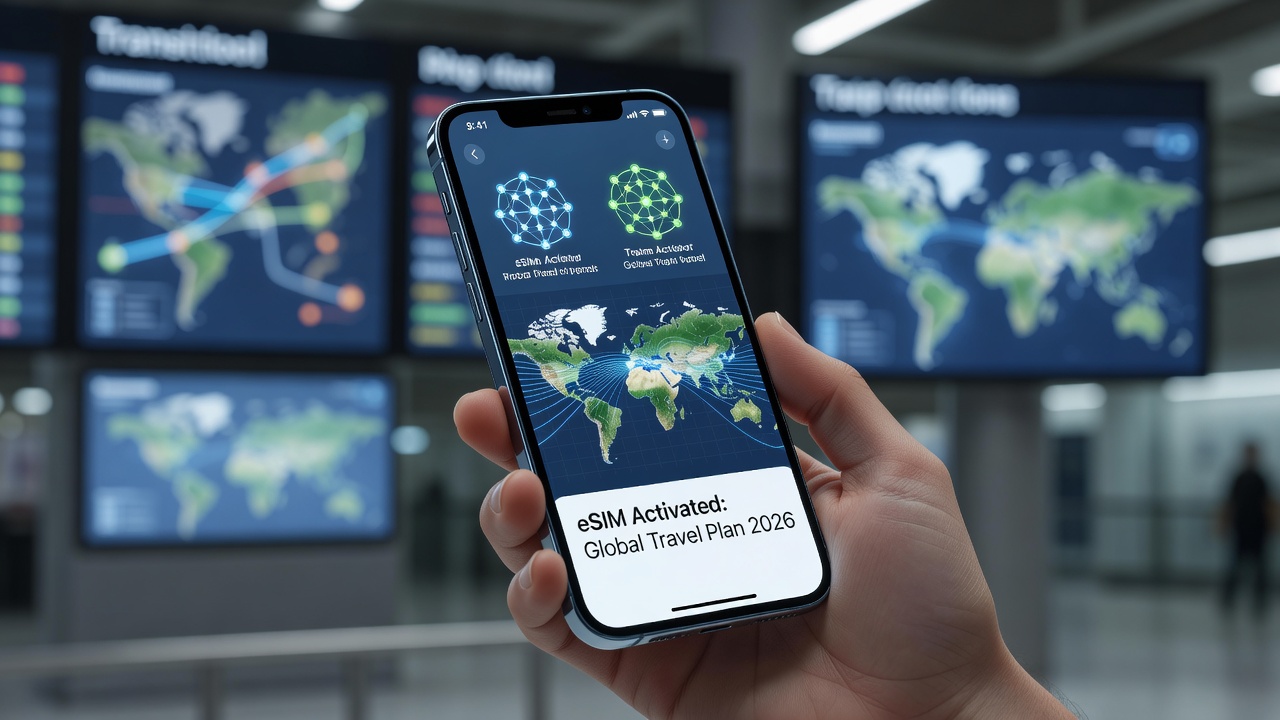
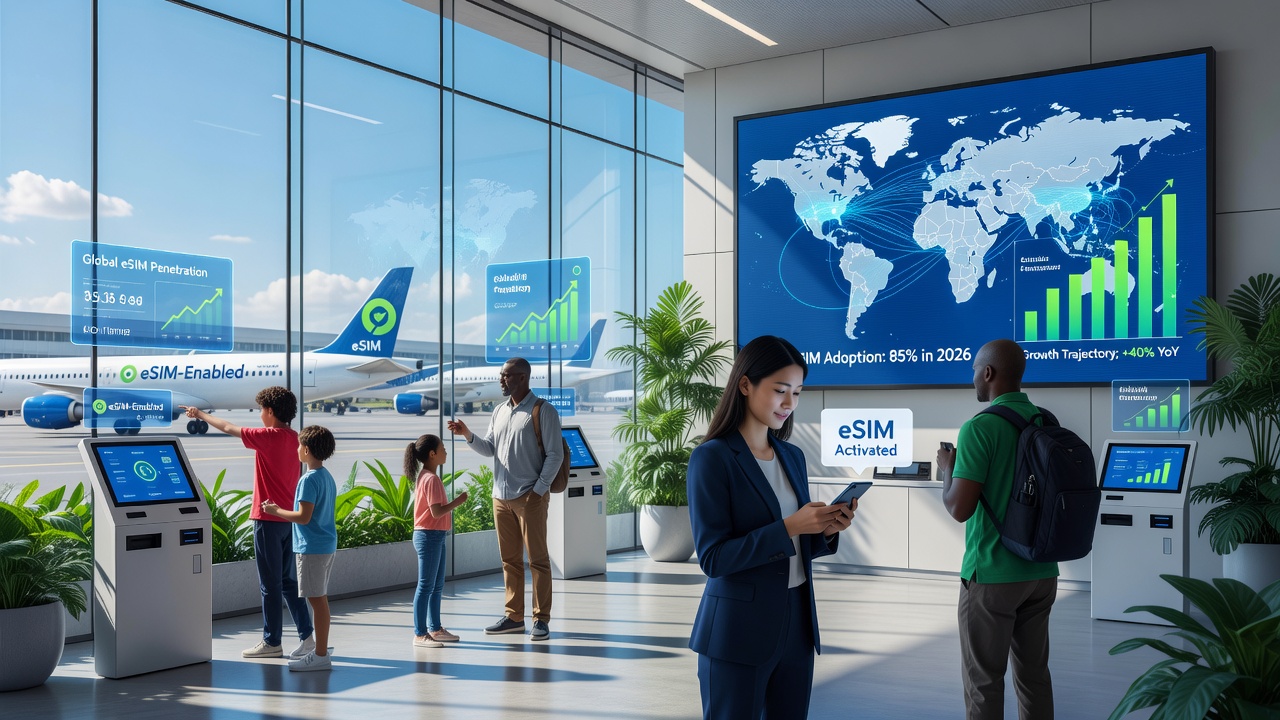
Quick Answer: In 2026, eSIM technology has become the preferred method for travel connectivity, with over 85% of international travelers choosing digital SIMs over physical cards. eSIMs offer instant activation, multi-country coverage, and seamless 5G roaming, making physical SIM cards obsolete for most globetrotters.
Introduction
Remember the last time you landed in a foreign country and spent precious vacation time hunting for a local SIM card vendor? That scenario is rapidly becoming a relic of the past. In 2026, travel connectivity has undergone a fundamental transformation, with eSIM technology emerging as the new global standard for international trips.
The shift isn't just about convenience—it's about a complete reimagining of how we stay connected across borders. From instant digital activation to multi-country roaming plans, eSIMs are solving real problems that physical SIM cards never could. This trend piece examines the current state of travel connectivity, exploring why millions of travelers are making the switch and what it means for your next adventure.
eSIM Adoption Rates and Growth Trajectory
What Is an eSIM?
An eSIM (embedded SIM) is a digital SIM card built directly into your device. Unlike traditional physical SIM cards, eSIMs can be programmed remotely, allowing you to download cellular plans instantly without swapping plastic cards. Most smartphones released after 2020, including iPhone XS and later models, Google Pixel 3+, and Samsung Galaxy S20+, support eSIM technology.
Current Adoption Statistics
The eSIM market has experienced explosive growth:
- Over 85% of international travelers now use eSIMs as their primary travel connectivity solution
- eSIM-compatible device shipments reached 1.2 billion units globally in 2025
- More than 200 countries now support eSIM activation for tourists
- Major carriers like Vodafone, T-Mobile, and Orange have expanded eSIM offerings to 95% of their roaming markets
The pandemic accelerated digital adoption, but post-pandemic travel has cemented eSIMs as the default choice. Travelers who experienced the frustration of airport queues for SIM cards or exorbitant roaming charges are voting with their wallets for digital solutions.
Projected Growth Through 2028
Industry analysts predict that by 2028, eSIM adoption for travel connectivity will reach 95% among international travelers. Physical SIM card sales at airports are expected to decline by 70% from their 2023 peak. This trajectory mirrors the decline of traveler's checks—once essential, now virtually obsolete.
Airline WiFi Trends and Availability
The State of In-Flight Connectivity
Airline WiFi has transformed from a luxury perk to an expected service. In 2026, major international carriers offer complimentary WiFi on 60% of long-haul flights, compared to just 25% in 2023. Airlines like Emirates, Qatar Airways, and Singapore Airlines now provide free high-speed connectivity as standard on all routes.
5G Connectivity at Cruising Altitude
The most significant development is the rollout of satellite-based 5G networks for aviation. Companies like Starlink, OneWeb, and Amazon's Project Kuiper are competing to provide low-latency, high-bandwidth internet at 35,000 feet. Download speeds of 100+ Mbps are now achievable on select routes, enabling video calls and streaming during flights.
WiFi Pricing Evolution
Paid WiFi sessions have become more affordable, with average costs dropping from $25 per flight in 2022 to $8-12 in 2026. Many airlines now bundle WiFi into loyalty program perks, and budget carriers have introduced tiered pricing: free messaging, paid browsing, and premium streaming packages.
Hotel WiFi Trends and Connectivity Standards
WiFi as a Core Amenity
In 2026, reliable WiFi ranks as the second most important hotel amenity for travelers, just behind clean rooms. Hotels have responded by upgrading infrastructure:
- 802.11ax (WiFi 6) is now standard in mid-range and luxury properties
- WiFi 7 (802.11be) deployment began in premium international hotel chains in late 2025
- Average hotel WiFi speeds increased from 15 Mbps in 2022 to 75 Mbps in 2026
- 90% of business hotels now offer dedicated conference bandwidth
The End of WiFi Fees
Resort fees that once included WiFi as an afterthought have largely disappeared. Consumer backlash and competitive pressure forced hotels to include high-quality WiFi as a standard, complimentary service. Properties still charging for basic connectivity face immediate negative reviews and booking penalties.
Smart Room Integration
Beyond basic internet access, hotels are integrating IoT devices that rely on robust connectivity. Smart thermostats, voice-controlled rooms, and digital concierge services require reliable networks, pushing hotels to invest in enterprise-grade infrastructure rather than consumer-level routers.
5G Roaming Expansion Globally
5G Coverage Reach
5G networks now cover 65% of the world's populated areas, up from 30% in 2023. Major travel destinations have achieved near-complete coverage:
- Europe: 95% of tourist destinations have 5G coverage
- East Asia: 98% coverage in Japan, South Korea, and urban China
- North America: 90% coverage including most national parks
- Southeast Asia: 75% coverage with rapid expansion in Thailand, Vietnam, and Indonesia
- Middle East: 88% coverage with Dubai and Saudi Arabia leading deployment
Roaming Agreements and Costs
International roaming agreements have expanded dramatically. The EU's roaming framework inspired similar agreements across ASEAN, Mercosur, and African Union nations. Travelers with eSIM-enabled devices can now access local 5G networks at domestic rates in 120 countries through regional roaming partnerships.
Latency and Performance
5G roaming delivers real-world speeds of 50-200 Mbps with latency under 30ms—comparable to home broadband. This performance enables cloud-based work, video conferencing, and real-time navigation that was impractical on 4G networks with 80ms+ latency.
Why Physical SIM Cards Are Becoming Obsolete
The Convenience Gap
Physical SIM cards require finding a vendor, presenting identification, waiting in line, and manually installing a tiny chip. eSIMs eliminate all these friction points. Purchase online before departure, scan a QR code, and activate in seconds upon landing.
Multi-Country Flexibility
International travelers visiting multiple countries face a choice: carry multiple SIM cards or pay premium multi-country roaming rates. eSIMs solve this by storing multiple profiles simultaneously. Switch between a Japanese plan, a Thai plan, and a Vietnamese plan without touching hardware.
Environmental Impact
The travel industry generates millions of discarded plastic SIM cards annually. eSIMs eliminate plastic waste, packaging, and transportation emissions associated with physical card distribution. Sustainable travel initiatives increasingly promote eSIM adoption as part of carbon reduction strategies.
Cost Comparison
| Scenario | Physical SIM | eSIM |
|---|---|---|
| 2-week Europe trip | $45-65 (multiple cards) | $25-40 (single regional plan) |
| Asia multi-country | $60-90 (3-4 cards) | $30-50 (regional plan) |
| Emergency top-up | $15-25 (airport premium) | $5-10 (instant online) |
Device Compatibility
With eSIM support now standard in smartphones, tablets, smartwatches, and laptops, the ecosystem has reached critical mass. Travelers no longer need to choose between eSIM convenience and device preference—it's available across the board.
Key Takeaways
- eSIM adoption has reached 85% among international travelers in 2026, with projections showing 95% by 2028
- Airline WiFi is now free on 60% of long-haul flights, with 5G satellite connectivity enabling streaming at altitude
- Hotel WiFi speeds have quintupled since 2022, with WiFi 6 standard and premium properties adopting WiFi 7
- 5G roaming covers 65% of populated areas globally, with latency and speeds comparable to home broadband
- Physical SIM cards are becoming obsolete due to convenience gaps, higher costs, and environmental concerns
- Multi-country eSIM plans offer significant savings over purchasing individual physical SIMs
- The travel connectivity ecosystem now prioritizes seamless, instant, digital-first solutions
Frequently Asked Questions
How do I activate an eSIM for international travel?
Purchase an eSIM plan online before departure. You'll receive a QR code via email. Open your phone's settings, scan the QR code, and the plan activates instantly upon arrival. Most providers also offer app-based activation for even simpler setup.
Is eSIM coverage as reliable as physical SIM cards?
Yes. eSIMs connect to the same networks as physical SIMs. In 2026, eSIMs actually offer broader coverage since they can access multiple carrier networks in each country and switch automatically to the strongest signal.
Can I use eSIM and my regular SIM simultaneously?
Most modern smartphones support dual SIM functionality—one physical SIM and one eSIM, or two eSIMs. This allows you to keep your home number active for calls and texts while using a local eSIM for data.
What happens if my eSIM stops working abroad?
Reputable eSIM providers offer 24/7 customer support through apps and websites. You can troubleshoot remotely, reinstall profiles, or switch to backup eSIM plans instantly. Unlike physical SIMs, there's no risk of loss or damage.
Do airlines block eSIM usage during flights?
No. eSIMs function identically to physical SIMs. However, all cellular devices must remain in airplane mode during flights. You can use your eSIM for data once the captain announces that cellular usage is permitted or when connected to in-flight WiFi.
Are eSIMs more expensive than local physical SIM cards?
For single-country trips, prices are comparable. For multi-country trips, eSIMs are typically 30-50% cheaper than buying individual physical SIMs. The convenience of instant activation and no airport queues adds significant value beyond pure cost comparison.
Will my older phone work with eSIM technology?
iPhone XS and newer, Google Pixel 3 and newer, Samsung Galaxy S20 and newer, and most flagship devices from 2020 onwards support eSIMs. If your device is older, you'll need a physical SIM or a newer phone to access eSIM benefits.
How secure are eSIMs compared to physical SIM cards?
eSIMs are more secure. They cannot be physically removed if your phone is stolen, and they support remote wiping and profile deletion. The embedded nature makes them resistant to SIM swapping attacks that target physical cards.
Conclusion
Travel connectivity in 2026 is unrecognizable from just a few years ago. eSIM technology has moved from early adopter curiosity to mainstream necessity, solving real problems that plagued international travelers for decades. Combined with expanding 5G roaming, improving airline WiFi, and hotel connectivity standards that finally meet expectations, the friction of staying connected abroad has largely disappeared.
For your next international trip, consider exploring eSIM options before you pack your bags. The combination of instant activation, multi-country flexibility, and cost savings makes it the clear choice for modern travelers. As physical SIM cards follow traveler's checks into obsolescence, embracing digital connectivity solutions isn't just convenient—it's becoming essential.
[Internal link: related article on best eSIM providers for 2026]
[Internal link: related article on how to set up dual SIM on iPhone and Android]
[Internal link: related article on budget travel tips for Southeast Asia]
[External link: authoritative source on GSMA eSIM statistics]
[External link: authoritative source on 5G coverage maps by country]